





Kalam Labs
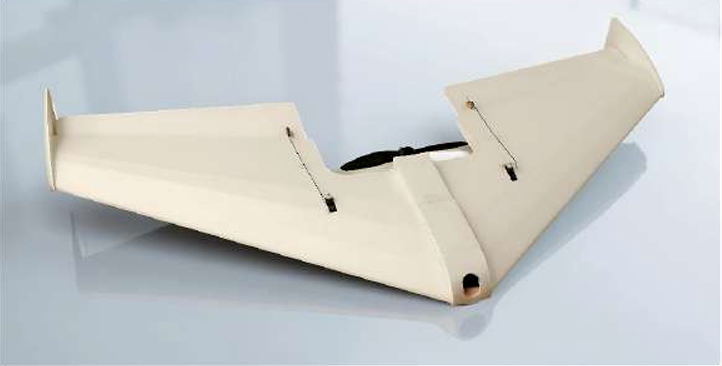
Stratospheric Retrievable Radiosonde: Reusable Weather Sensing UAV
Pricing on request
Quoted per order · Minimum order: 1 unit · 1-year warranty
Product Details
Type
Recoverable fixed-wing weather aircraft
Availability
On demand
Product ID
KL-STRATOSPHERE-RRS-2025
Warranty
1 year
Minimum Order
1 unit
Manufacturer
Kalam Labs
Flight-validated: autonomous deployment and retrieval verified in supervised meteorological trials (2025).
Product Overview
Autonomous, Recoverable Radiosonde Platform
The retrievable radiosonde is a reusable, balloon-launched weather-sensing platform with autonomous return. It rides a weather balloon to altitude, streams live data to the ground, then flies itself back to the launch site. Traditional radiosondes are single-use, and over 80% of the 600,000 launched each year are lost. Recovering the instrument cuts per-launch cost and electronic waste, and makes repeat soundings with the same sensors possible.
Key Features
Mission parameters for deployment, sensing, and recovery.
Type
Recoverable weather aircraft with autonomous flight
Launch
Rides a standard weather balloon, then flies home
Recovery Range
Up to 75 km at 30 km release
Weight Class
Under 750 g, sensors included
Telemetry
Long-range 2.4 GHz link
Data Latency
60-80 ms live stream
Telemetry Distance
Up to 100 km line of sight
Power
Rechargeable, field-swappable battery
Recovery
Autonomous return to the launch site
Specifications
Flight Envelope
Operating Ceiling
30 km on balloon ascent
Cruise Speed
18-26 m/s
Endurance
40-120 min, profile dependent
Temperature Range
−60 °C to +50 °C
Measurements
Weather
Temperature, humidity, pressure
Air Quality
Gas-sensor AQI readings
Position
Satellite positioning throughout the flight
Motion
Attitude and velocity
Operations
Deployment
Standard weather-balloon launch
Release
Time, altitude or ground command
Turnaround
Inspect, recharge and fly again
Field Service
Swappable modules, under 10 min
Data & Telemetry
- Live MAVLink stream: position, temperature, humidity, pressure
- Air-quality (AQI) readings with every profile
- Attitude and velocity for trajectory reconstruction
- 60-80 ms latency, up to 100 km line of sight
- Full flight logs, exportable as CSV
Scientific Applications
- Upper-air profiling for weather forecasting
- Atmospheric and climate research
- Air-quality (AQI) profiling
- Disaster forecasting and monitoring
- Near-space imaging and balloon-burst observation
Optional Onboard Camera
Resolution
4K at 30 fps, up to 120 fps at 1080p
Stabilisation
Electronic, with motion data for post-processing
Recording Time
Up to 60 min in 4K
Added Mass
About 50 g
Records the flight for analysis, balloon burst observation, basic terrain reconstruction, and post-flight review without consuming telemetry bandwidth.
Validation Through Flight Testing
Supervised Meteorological Trials (March 2025)
Supervised by a senior government meteorological scientist, with academic support from university aerospace faculty and lighter-than-air specialists.
| Date | Altitude | Test Type | Key Achievement |
|---|---|---|---|
| 17 Mar 2025 | 5 km | Retrieval Test | Sub-tropopause retrieval demonstrated |
| 18 Mar 2025 | 6 km | Cruise Test | Optimal battery cruise between 8-6 km |
| 21 Mar 2025 | 8 km | Final Validation | Autonomous deployment and retrieval verified |
- Radio link proven up to 32 km line of sight.
- Temperature resilience down to −45 °C.
- Wind handling validated at 35-70 km/h.
- Barometric altitude estimates matched instrumentation.
- High-fidelity flight logs generated for ML training.
Extended Field Trials (July 2025)
Trial 1, July 19: 26,574 ft altitude, 92-minute mission, full meteorological data set, autonomous recovery within WMO standards.
Trial 2, July 21: deployment at 8,001 m, 29-minute ascent, autonomous landing.
Second sortie: 8,546 m deployment, 46-minute ascent, 116-minute loiter with 60% battery reserve, on-command station keeping.
Pricing & Ordering
Pricing is quoted per order, based on quantity and configuration. Minimum order is one unit, and every unit comes with a 1-year warranty.
Warranty
- 1-year coverage for manufacturing defects, electronics, workmanship issues.
- Field-replaceable modules covered via swap/replacement.
Shelf Life
- Battery pack: 2-3 years (store at 40-60% charge, top-up every 60-90 days).
- Electronics: 6-7 years with controlled humidity.
- Airframe & composites: 6-7 years under normal storage.
Maintenance Plan (1 Year)
- Preventive maintenance: two scheduled checks per year.
- Repairs and crash rebuilds, as set out in the plan.
- Parts support from included spares.
- Service response: five working days turnaround.
- Technical support: troubleshooting, mission log review, tuning.
Company Profile
Kalam Labs is a Stratospheric Aerial Robotics Lab. The team designs, builds and flies near-space aerial vehicles, deployed at 100,000+ ft using lighter-than-air systems, for meteorological and upper-atmosphere research.
- Retrievable radiosondes: autonomous deployment and retrieval verified in supervised meteorological trials.
- Flight controllers, composite airframes and long-range telemetry built in-house.
- Flight systems proven down to −45 °C and in 35-70 km/h winds.
- Backed by Y Combinator and Lightspeed.